Hey Petrolheads!!! Last blog was The worst roads roads in the world, well this time it is the Top 8 worst cars ever made. With that said lets start.
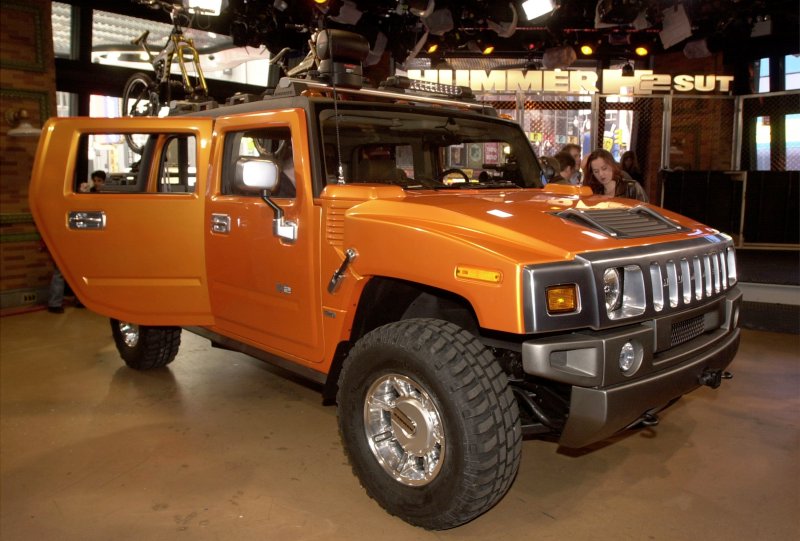
Hummer H2 (2003)
One struggles to think of a worse vehicle at a worse time. Introduced shortly after 9/11 — an event whose causes were tangled in America’s unquenchable thirst for oil — the Hummer H2 sent all the wrong signals. It was/is arrogantly huge, overtly militaristic, openly scornful of the common good. As a vehicle choice, the H2 was a spiteful reactionary riposte to notions that, you know, maybe we all shouldn’t be driving tanks that get 10 miles per gallon. Not surprisingly, the green-niks struck back. A Hummer dealership was torched in Southern California. The H2 was also a PR catastrophe for GM, who happened to be repossessing and crushing the few EV1 electric cars at the time. It all contributed to GM’s emerging image as the Dick Cheney of car companies.

The Austin Allegro
Let’s re-cross the pond to examine another British disaster. The Allegro, apart from a mechanical problem where the front axle would collapse, had all sorts of dimensional issues. Whereas most designers of the day preferred rectangular edges, this thing resembled a series of metal bubbles pasted together with a soldering iron. As Nigel puts it, “The body would flex when jacked up. Jacking up would be done frequently. People blamed the car flex on people jacking from the wrong spot, rather than the fact that the body flexed.” Also hilarious was the “quartic” steering wheel, rectangular with rounded sides. Other manufacturers had tried to reinvent the wheel this way, but never so dodgily. The Allegro was a legendary disaster.
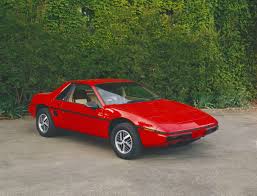
Pontiac Fiero
The Pontiac Fiero is a mid-engine sports car that was built by American automobile manufacturer General Motors from 1983 to 1988 for the 1984 to 1988 model years. .On paper, it was a killer car – small, relatively light, and entertaining. At first, it was very well accepted by customers, who praised it for its handling and affordable price. It was sexy and economical, and – most importantly – made in America. But after a strong first impression, it took only about two years for the car enthusiasts to literally begin hating it.
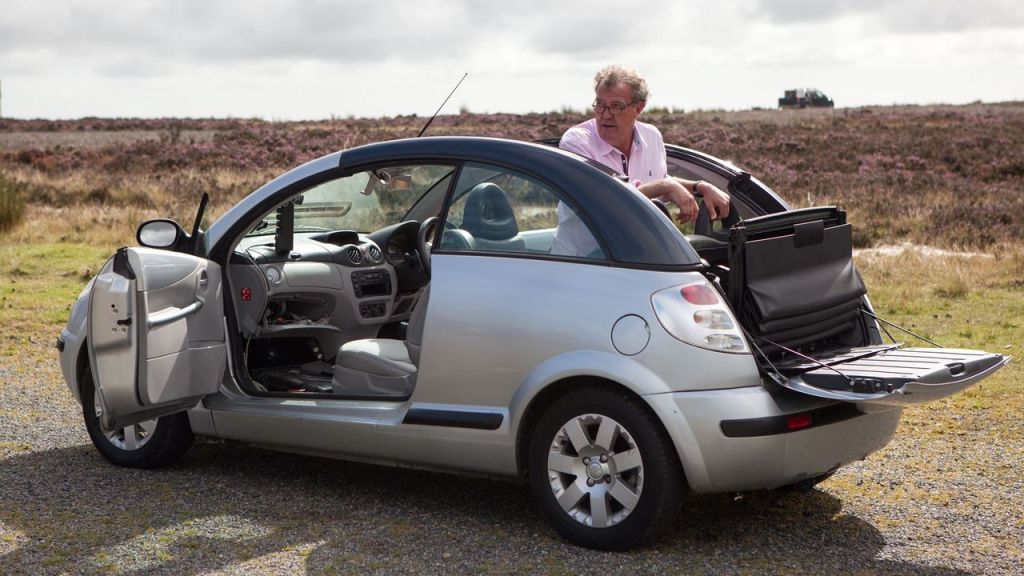
2003 Citroën C3 Pluriel
Built in apparent homage to the plucky utility of the French marque’s globe-colonising 2CV, the C3 Pluriel was a versatile little thing, with removable arched roof pillars and a swing-down rear gate, in the manner of a pickup truck. Caught out in the rain with the top down, though, and the Pluriel’s passengers were in for a bath, as the pillars could not be stowed on board. A retracting fabric top was the middle way, but even then, it was given to leaks. One to hire at the Nice airport rental counter, then, but not one to buy.

Mahindra CJ540
From a mechanic’s perspective, there is much to be said for a vehicle that is simple, cheap and ubiquitous. From a driver’s perspective, there is, more often than not, decidedly less to be said for such a vehicle. Take the Mahindra CJ540, built in India and exported up until 1991. This tough little off-roader was essentially a vintage Jeep CJ-3A (produced under license) with a lumpy Peugeot diesel engine under the hood. Handling? No. Creature comforts? No. User-friendliness? No. One of the world’s worst? Yes.

1972 Rolls-Royce Corniche
To car aficionados who grew up convinced that Rolls-Royce sat at the vortex of the motoring world, driving a 1970s-era Corniche (or, inevitably, fixing one) will come as a less-than-pleasant surprise. Despite the presence of a 6.75-litre V8 behind that famous grille, the 4,800lb Roller was pokey to a fault, let down by performance-choking smog hardware and a dim-witted three-speed automatic transmission from General Motors. Yes, it is lovely in fixed-head or convertible guise, and its sumptuous cabin is utterly cosseting. And of course, it is hand-built. So the Corniche is not without its charms. Then again, to quote Jeremy Clarkson, “Hand-built is just another way of saying the door will fall off.”
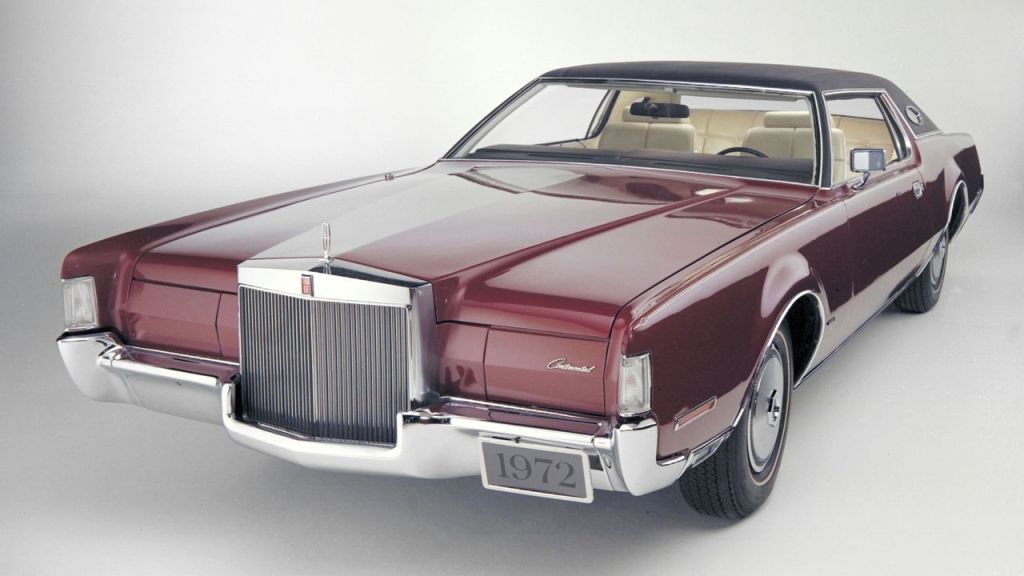
1972 Lincoln Continental Mark IV
One would be hard-pressed to name a genuinely stellar American car built during the 1970s, but naming the bombs, as the saying goes, is like shooting fish in a barrel. The 1972-76 Lincoln Continental Mark IV, despite its button-tufted grandiosity and Bugatti-like succession of special editions (Bill Blass, Givenchy and Cartier, to name three), merits a place near the top of any list. A notably less loveable successor to the handsome 1968-71 Mark III, the Mark IV added such stylistic missteps as a tacky opera window and a standard vinyl roof. Handling was tugboat-terrible, and though the ’72 had an ample 365 horsepower, successive iterations, hobbled by tightening emissions restrictions, made do with 212hp. Awful.
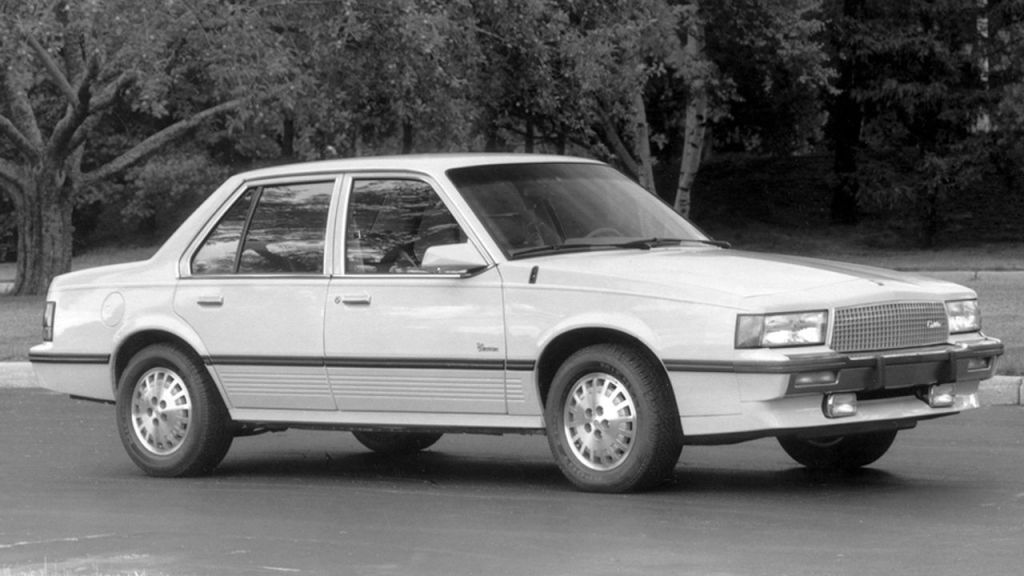
1982 Cadillac Cimarron
It is nigh on impossible to imagine that Cadillac’s inept and unrefined Cimarron, the poster child for the sin of badge-engineering, was conceived to rival such vaunted cars as the BMW E30 3 Series and the Audi 4000. But it was, and between 1982 and 1988, it didn’t. Even GM had misgivings; salesmen were initially told not to refer to the flaccid four-door as a Cadillac – it was, said promotional materials, a “Cimarron, by Cadillac”. Its foundation was General Motors’ underachieving J-platform, which thanks to this cursed Caddy, became the only platform to underpin cars from every General Motors division, which at the time included Buick, Chevrolet, Oldsmobile, Pontiac, Holden, Opel and Vauxhall (not to mention Isuzu in Japan). Three jeers!
Well that’s all for this time
Goodbye
 Zohair - The Petrol Head